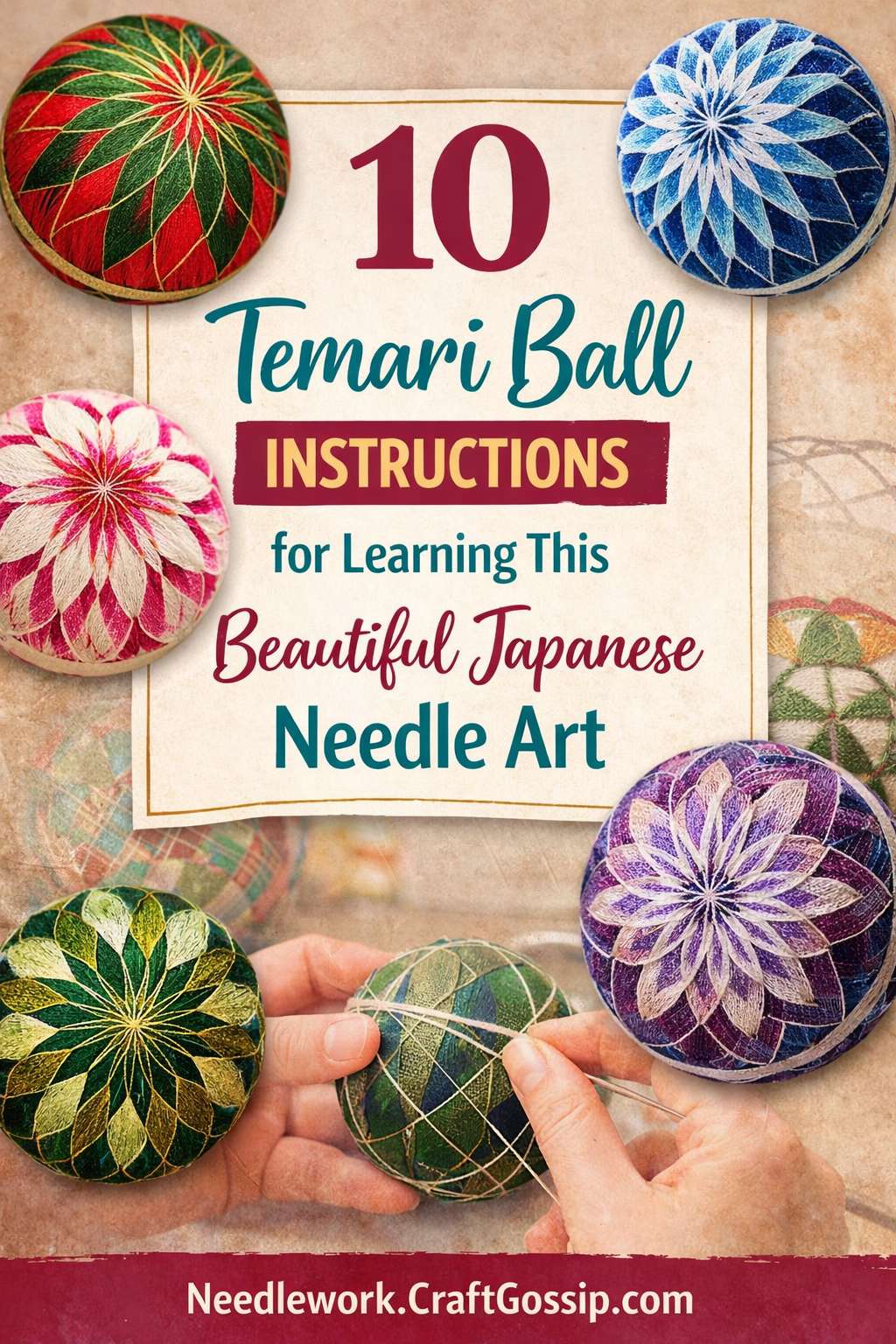
If you’ve ever fallen down a rabbit hole of perfectly stitched thread balls and thought, how on earth do people make those, this little roundup is for you. Temari has that magical combination of precision and charm that makes it feel both traditional and a bit addictive once you start.
What I love about temari is that it isn’t just about pretty stitching. You’re learning how to build and wrap the ball, mark divisions accurately, and then stitch those geometric patterns over the top. TemariKai’s beginner guidance explains that learning the ball structure, divisions, and stitching all go hand in hand, which is why starting with good instructions makes such a difference.
Here are some of the best temari ball instruction resources to get started.
Beginner’s Guide to Temari & TemariKai.com
This is probably the best first stop if you are brand new to temari. It walks through the basics, supplies, and mindset for getting started without making the whole craft feel intimidating. I like this one because it feels like being shown the doorway before being thrown into the fancy patterns.
How To Contents on TemariKai.com
If you want a proper temari learning hub, this is the one to bookmark. It gathers beginner pages, stitching fundamentals, glossary help, mari making, and other how-to sections in one place. It’s ideal for readers who like to teach themselves one step at a time rather than jump around randomly.
Mari Making Tutorial
Before the decorative stitching comes the actual ball, and this tutorial focuses on making and wrapping the mari itself. That part is easy to underestimate, but it’s a huge part of getting a smooth, tidy finish. If your finished temari always looks a little lumpy, this is where I’d start.
Mari Making
This is another helpful foundational page that explains why the base ball matters so much in traditional temari. It’s a really good companion read if you want to understand the craft properly instead of only copying surface stitches. TemariKai makes the point that the mari is an essential step, not just prep work.
Standard Temari Divisions
This is one of those pages that sounds a bit dry until you realise divisions are the secret to making temari actually work. Good divisions are what give those patterns their balance and symmetry. If you’re serious about learning, this page is gold because it focuses on the framework every stitched design sits on.
Uwagake Chidori & Kiku
Kiku is one of the classic temari motifs and a really lovely place to start once you’ve grasped the basics. This page explains the uwagake chidori method and how it forms that beautiful chrysanthemum-style effect. It’s beginner-friendly in the sense that it teaches an iconic stitch family you’ll see over and over again in temari.
Temari Pattern GT14
This is a beginner design and a great first project once you’re ready to move from theory into making an actual temari. It uses a classic kiku approach and gives you a clearer sense of how divisions and stitching come together on a finished ball. I always think actual project pages make the learning click faster.
Temari Pattern SC03
This one is a nice next-step project when you want to practice neat stitching and clean thread placement. It’s useful because it gets you thinking about materials, marking threads, and finish quality, not just copying the pretty outside. That’s usually the stage where your temari starts looking much more polished.
How to Make Temari
If you prefer a more casual, general craft-tutorial style rather than a specialist temari resource, this one is worth a look. It breaks the process down into approachable steps like rolling the ball, marking, and beginning the stitched design. It feels a little more everyday-maker friendly for nervous beginners.
How to make temari – a basic tutorial
This tutorial is another nice beginner-level option and helpful for seeing the process explained a little differently. Sometimes that’s all it takes for the wrapping and marking stage to suddenly make sense. I especially like having a second basic tutorial on hand when learning a craft this precise.
A few beginner notes before you start
TemariKai’s beginner materials list includes yarn, sewing thread, pins, scissors, a tape measure, and paper strips for marking, which gives you a good idea of the basic toolkit you’ll need.
The biggest thing to know is that temari is built on three skills:
making the ball, marking the divisions, and stitching the pattern. Once those click, the more decorative designs become much less intimidating. That’s why beginner resources focusing on divisions and kiku-style patterns are often the best place to begin.
For a bit of cultural context, Japan National Tourism Organization notes temari as one of Japan’s traditional crafts, which is part of what makes this needlework feel so special to learn.



Leave a Reply