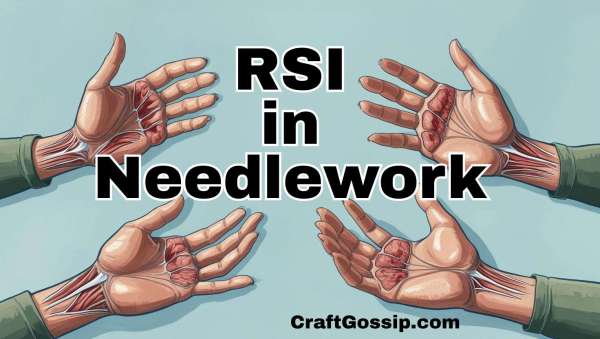
Needlework is a relaxing and rewarding craft that allows you to create beautiful, intricate pieces of art. However, like any hobby that involves repetitive hand movements, needlework can lead to repetitive stress injuries (RSI) if not done properly. These injuries can occur from prolonged, repetitive motions, poor posture, or improper technique. It’s important to be aware of the risks and take steps to prevent RSI while still enjoying your favorite needlework projects. In this expanded guide, we’ll discuss what RSI is, the risks it poses, and the best practices to prevent it.
What is Repetitive Stress Injury (RSI)?
Repetitive Stress Injury (RSI), also known as cumulative trauma disorder or overuse injury, refers to a group of conditions caused by repetitive motion or sustained activity that puts strain on muscles, tendons, nerves, or joints. In the context of needlework, RSI can result from continuous stitching, holding your needlework projects in an uncomfortable position, or working for long hours without proper breaks. Over time, this strain can cause pain, inflammation, and even long-term damage to the muscles and tendons in your hands, wrists, and arms.
Common Types of RSI in Needlework
Carpal Tunnel Syndrome – One of the most common types of RSI, carpal tunnel syndrome occurs when the median nerve in the wrist becomes compressed due to repetitive movements. For needleworkers, this could happen from prolonged gripping of a needle or hoop. Symptoms include tingling, numbness, or weakness in the fingers or hands.
Tendonitis – Tendonitis occurs when the tendons become inflamed due to repetitive motions. In needlework, this could affect the tendons in the fingers, wrists, or elbows. Symptoms include pain, swelling, and limited movement in the affected area.
Trigger Finger – This condition involves the locking or catching of a finger when moving it, often caused by overuse or repetitive gripping. It can lead to pain, swelling, and difficulty straightening the finger.
Epicondylitis (Tennis Elbow or Golfer’s Elbow) – Both tennis elbow and golfer’s elbow are caused by overuse of the elbow joint, resulting in pain in the forearm and elbow. In needlework, this condition can develop from repeated motions that strain the elbow, such as holding the needlework for long periods in an awkward position.
Neck and Shoulder Pain – Sustained poor posture while working on needlework projects can lead to tension and pain in the neck and shoulders. Over time, this can result in muscle strain, stiffness, and discomfort.
How to Prevent RSI in Needlework
The good news is that RSI is largely preventable with a few simple adjustments to your habits and workspace. Here are some practical tips to help you reduce the risk of developing repetitive stress injuries while enjoying your needlework projects.
Take Regular Breaks
One of the most important things you can do to prevent RSI is to take regular breaks. Even if you’re immersed in a project, it’s essential to stop every 20-30 minutes and stretch your hands, wrists, and arms. A short break can go a long way in reducing muscle fatigue and tension.
Stretch your wrists and fingers: Gently stretch your hands and wrists every 20 minutes to give your tendons a break. Stretch your fingers, rotate your wrists, and extend your arms to prevent stiffness.
Rest your eyes: If you’re working closely on your project, rest your eyes by looking away for a minute or two to reduce eye strain.
Adjust Your Work Position
The way you position your body while working on needlework can have a big impact on preventing RSI. Make sure that your posture is comfortable and neutral to reduce unnecessary strain.
Sit in a comfortable chair: Choose a chair that supports good posture, with your feet flat on the floor and your back supported. Avoid slouching, as this can strain your back and shoulders.
Position your work at eye level: Keep your needlework project at a comfortable height to avoid bending your neck forward or looking down for extended periods. A well-positioned work surface can reduce strain on your neck and shoulders.
Use Ergonomic Tools
Investing in ergonomic tools can help reduce strain on your hands, wrists, and arms. There are many ergonomic options available for needleworkers that promote more comfortable and natural hand movements.
Ergonomic hoops and frames: Consider using an embroidery hoop or frame that has padded grips or ergonomic handles to reduce strain on your fingers and hands.
Soft grip needles and tools: Look for tools that are designed with ergonomic grips or soft handles to reduce tension on your fingers and wrists.
Needlework thimbles: A thimble can provide support for your fingers while stitching, especially when working with thicker threads or fabric. It helps reduce the pressure on your fingertips, preventing blisters and soreness.
Alternate Your Hand Positions
When working on needlework, avoid holding your hands and wrists in the same position for extended periods of time. Instead, alternate between different hand grips and movements to reduce the strain on any one area.
Switch hands: If you can, try alternating between your dominant and non-dominant hand for certain tasks to balance the workload between your hands.
Change your stitching method: Vary your stitching style from time to time to reduce repetitive motion. For example, switch between cross-stitching and embroidery or try using a different stitch technique to keep things fresh.
Use Stretching and Strengthening Exercises
Incorporating stretching and strengthening exercises into your routine can help keep your muscles, tendons, and joints flexible and strong. This can reduce the risk of strain and improve your endurance during needlework sessions.
Wrist stretches: Stretching your wrists regularly can help prevent pain and stiffness. A simple wrist stretch involves extending your arm, palm up, and gently pulling your fingers back with your other hand.
Strengthening exercises: Strengthening the muscles in your hands and forearms can help support your joints and tendons during needlework. Try squeezing a stress ball or using resistance bands to build strength.
Listen to Your Body
It’s important to pay attention to any signs of discomfort while working on needlework. If you experience pain, tingling, or numbness in your hands, wrists, or arms, take a break immediately. Ignoring these signals and continuing to work can lead to more severe injuries down the road.
Rest when needed: Don’t push through pain. If your body is signaling that it needs a break, take it. Allow yourself time to recover and avoid overexerting yourself.
Seek professional help: If you experience persistent pain or discomfort, consider consulting a healthcare professional, such as a physical therapist or occupational therapist. They can help assess your technique and suggest exercises or adjustments to prevent further injury.
Final Thoughts
Needlework is a wonderful, creative hobby, but like any activity that involves repetitive movements, it’s important to be mindful of the risk of repetitive stress injuries. By taking regular breaks, maintaining good posture, using ergonomic tools, and listening to your body, you can protect yourself from injury and enjoy your needlework projects for years to come. With these simple adjustments, you’ll be able to craft with ease and comfort—making your needlework experience even more enjoyable!
Chris Adams over at about.com has written an informative Article on just how to prevent it. You are probably thinking it won’t happen to you, but trust me you do not want the pain associated with this dibilitating injury. Still not convinced? If you get RSI how will you be able to craft ???
Check out the article for all the do’s and don’ts to insure your crafting for years to come.



Leave a Reply