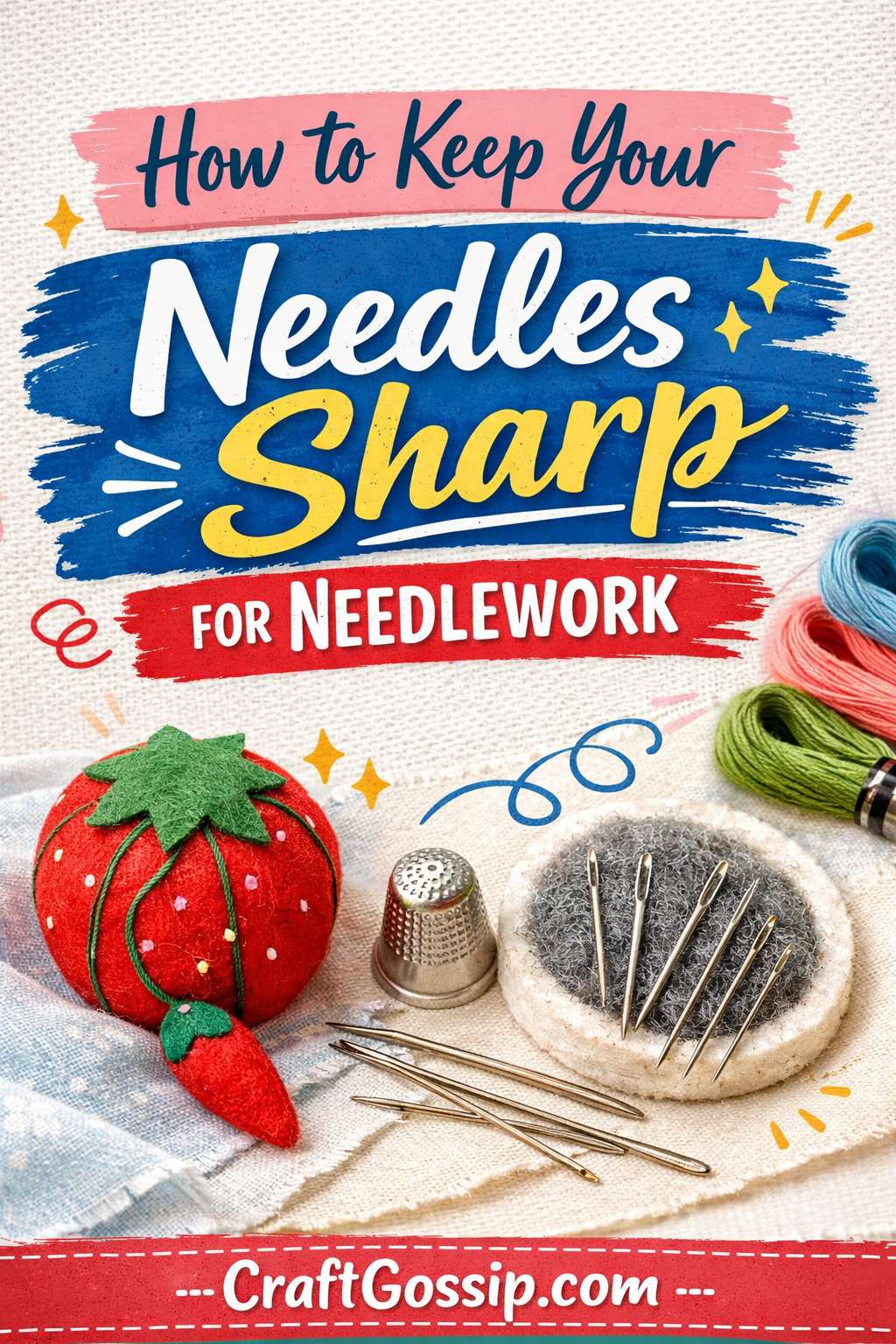
Needles are essential tools for any needlework enthusiast, whether you’re embroidering, cross-stitching, or quilting. A sharp needle ensures clean, smooth stitching and makes the process more enjoyable and less frustrating. Over time, however, needles can become dull, which can cause fabric snags, uneven stitches, and an overall lack of precision in your work. Luckily, there are several ways to maintain your needles’ sharpness and prolong their lifespan. Here’s a guide to help you keep your needles sharp for all your needlework projects.
Use the Right Needle for the Job
Different needle types are designed for different purposes, and using the right one can help keep it sharp for longer. Always choose a needle suited for your fabric and thread. For example:
Fine needles are best for delicate fabrics like silk or fine linen.
Thicker needles are ideal for heavier fabrics like denim or canvas.
By using the correct needle, you avoid unnecessary stress on the needle, which can cause it to dull prematurely.
Avoid Forceful Stitching
One of the biggest causes of dull needles is forcing them through fabric. If you find yourself applying too much pressure, it’s time to reassess your technique or thread choice. If the needle is not gliding easily through the fabric, it may be a sign that:
You’re using the wrong type of needle.
The fabric is too thick or stiff for the needle.
Your stitching technique needs adjustment.
Try to let the needle move through the fabric naturally without excessive force. This will help preserve its sharpness.
Store Needles Properly
Proper storage is key to keeping your needles in top shape. Storing needles improperly can cause them to become bent or dull. Here are a few tips for needle storage:
Needle cushions or cases: These protect your needles from bending or dulling by keeping them in an organized place.
Avoid hard surfaces: Never store needles on hard surfaces where they can get knocked about or rust.
Keep them dry: Humidity and moisture can cause rust, dulling the needle over time. Make sure your needles stay dry by storing them in a cool, dry location.
Clean Your Needles Regularly
Needles that are coated in dust or lint from your fabric or thread can become dull. Cleaning your needles regularly helps maintain their sharpness and ensures smooth stitching.
Wipe the needle with a soft cloth after each use to remove any fabric fibers or threads that might be stuck.
If your needle has become particularly dirty or sticky, soak it in a small amount of rubbing alcohol to remove any residue. After cleaning, dry it thoroughly with a soft cloth.
Sharpen Your Needles
If you find that your needle has become dull, you can sharpen it yourself. Here’s how:
Use a sharpening stone: Lightly drag the needle over a fine sharpening stone or emery board in a gentle back-and-forth motion. Be careful not to apply too much pressure or you could damage the needle. I haven’t tried this, but have heard good things about the stones.
Aluminum foil method: Some crafters suggest wrapping aluminum foil around a piece of cardboard and running the needle through the foil a few times to sharpen it.
It’s important to note that some needles, especially high-quality ones, may be difficult to sharpen effectively at home. In such cases, it’s best to replace them when they begin to dull.
Switch to Stainless Steel Needles
Stainless steel needles tend to resist rust and corrosion better than regular steel needles, making them more durable and longer-lasting. Stainless steel also holds its sharpness longer, reducing the need for frequent sharpening. If you work with high-end fabrics or do a lot of embroidery, switching to stainless steel needles can save you time and effort in the long run.
Don’t Overuse Needles
Over time, even the sharpest needles will wear down. If you notice that your needle is no longer as effective or is leaving marks on your fabric, it might be time for a replacement, (don’t need to tell me twice to go shopping). Constant use can cause microscopic damage that’s difficult to detect but still affects your stitching quality.
Replace your needles regularly to ensure the best results, especially if you’re working with heavier fabrics or thicker threads.
A sharp needle is essential for producing beautiful, precise needlework. By following these tips, you can extend the life of your needles and ensure smooth, enjoyable stitching every time. Remember to use the right needle for the job, store them properly, clean them regularly, and replace them when necessary. With a little care and attention, your needles will stay sharp and ready to help you create stunning works of art for years to come.

Leave a Reply