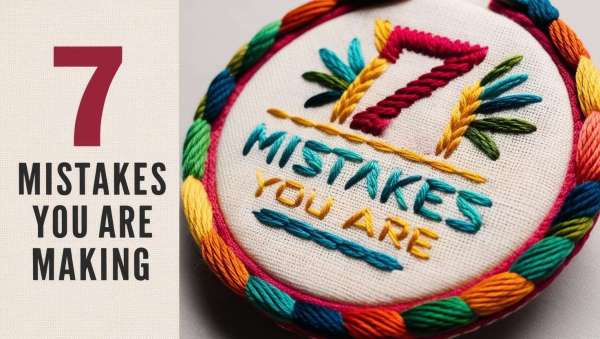
Needlework is an incredibly rewarding and relaxing craft, but even the most seasoned stitchers can fall into a few common traps. Whether you’re an experienced embroiderer or just starting, making mistakes is part of the journey. The good news? Most of these errors can be easily fixed! In this post, we’ll break down seven of the most common needlework mistakes and how to avoid or fix them.
1. Using the Wrong Needle for the Job
It might seem like a small detail, but choosing the wrong needle can make a world of difference. Whether it’s too thick or too thin for the fabric or thread, using the wrong needle can result in uneven stitches, snagging, or even damaging your fabric.
Fix it: Always choose a needle that matches your fabric and thread. For example, a thinner needle works best for delicate fabrics like linen, while a thicker needle is needed for heavier materials. Keep a variety of needles on hand to suit different types of projects!
2. Not Using the Right Thread Tension
Thread tension is crucial in needlework. If your thread is too tight, your stitches will look puckered and uneven. On the flip side, if it’s too loose, your stitches will appear sloppy and may not hold up well over time.
Fix it: Adjust your tension as you go. Practice with scrap fabric until you can get a feel for the right amount of tension. Remember, the goal is smooth, consistent stitches that don’t distort the fabric.
3. Skipping the Pre-Wash
You might think skipping the pre-wash step saves time, but it can actually cause issues down the road. Without pre-washing your fabric, you risk shrinkage, color bleeding, or uneven texture once your finished project is washed.
Fix it: Always pre-wash your fabric before starting your project. This simple step ensures your fabric behaves as expected and prevents any surprises later on. Plus, it helps remove any chemical residue from the manufacturing process.
4. Not Using Enough Fabric
Another common mistake is not using enough fabric for your project. If you cut your fabric too small, you may find yourself running out of room for your design or not having enough space to properly finish your edges.
Fix it: Always leave extra space around your design. A good rule of thumb is to add at least 3 inches to each side of your design. This gives you plenty of room for framing, finishing, and any minor adjustments you might need to make.
5. Incorrect Stitching Techniques
Every stitch has a specific technique, and if you’re not following it correctly, your work can look sloppy or uneven. Whether it’s the wrong direction for a satin stitch or using a lazy daisy stitch incorrectly, improper stitching can detract from the overall look of your piece.
Fix it: Before starting, watch a few tutorials on the stitches you’re unfamiliar with. Practice on a small piece of scrap fabric until you get the hang of each stitch. It’s all about consistency and getting the right technique down to ensure your stitches look uniform.
6. Ignoring Fabric Grain
When working with fabric, ignoring the grain (the direction the threads are woven) can lead to distortion, especially when stretching the fabric in a hoop. This can cause your stitching to warp, making your design look askew.
Fix it: Always check the grain of your fabric. Make sure it’s aligned properly when you hoop it. If you’re working with a larger project, consider basting the fabric to help keep it in place and prevent stretching.
7. Not Taking Breaks
As tempting as it is to power through a project, not taking breaks can result in mistakes that could have been avoided with a little rest. Whether it’s squinting at tiny stitches or dealing with hand cramps, overworking can lead to fatigue and errors.
Fix it: Take regular breaks to stretch, relax, and give your hands and eyes a rest. Even a 5-minute break can help you come back refreshed and catch any mistakes you might have missed while powering through.
Needlework should be fun and rewarding, but these simple mistakes can turn a relaxing hobby into a frustrating experience. The good news is that they’re easy to fix! By being mindful of your tools, techniques, and taking your time, you’ll enjoy smoother, more enjoyable stitching and see better results in your projects.
What needlework mistakes have you made in the past? Share your experiences or any tips you’ve picked up along the way in the comments below! Happy stitching!



Leave a Reply