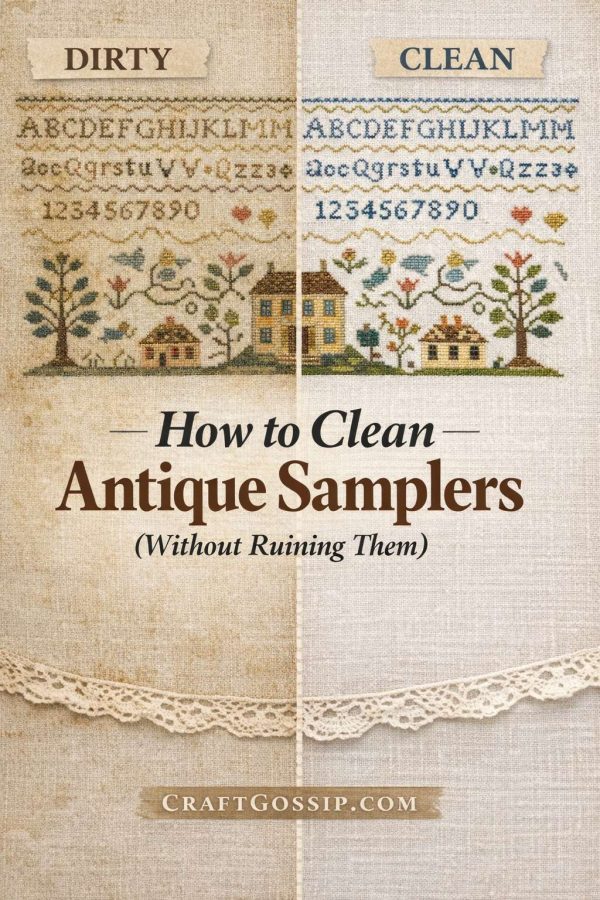
Owning an antique sampler is a privilege. These pieces aren’t just embroidery — they’re personal history stitched into linen, often marking names, dates, alphabets, or family stories that have quietly survived for generations. Because of that, cleaning antique samplers needs to be done slowly, gently, and with the right tools.
I’ve lost count of the emails that begin with, “I inherited a sampler and I’m afraid to touch it.” That instinct is usually the right one. When it comes to antique needlework, preservation always matters more than brightness.
Why Antique Samplers Need Special Care
Most antique samplers were stitched on linen or early cotton using threads dyed with natural or unstable dyes. Reds, blues, and browns are particularly prone to bleeding. Once color runs, it cannot be reversed — and even gentle scrubbing can permanently weaken fragile fibers.
If your sampler is extremely fragile, smells strongly of mold, or shows signs of rot or insect damage, cleaning at home is not recommended. Conservation, not cleaning, is the safer choice.
Start With Safe Surface Cleaning
For lightly dusty or dull samplers, dry cleaning is often enough.
Lay the sampler flat on a clean white towel. Using a soft natural-bristle brush or a clean makeup brush, gently brush the surface to lift dust.
Recommended tools:
• Soft natural-bristle brush
• Large fluffy makeup brush (unused)
Always brush in one direction and support the fabric underneath to prevent stress on the threads.
For deeper dust, many stitchers use a low-suction handheld vacuum with a mesh screen placed over the sampler first.
Helpful options:
• Handheld vacuum (low suction)
• Fine mesh fabric for protection
Always Test for Color Bleeding
Before introducing moisture, color testing is essential.
Use cotton swabs dipped in distilled water and gently blot a hidden section of each color. Do not rub.
Supplies:
• Cotton swabs
• Distilled water (1 gallon)
If any color transfers to the swab, stop immediately. That sampler should not be wet cleaned at home.
Gentle Washing (Only If It’s Truly Safe)
If the sampler passes color testing and is structurally sound, minimal wet cleaning may be possible.
Fill a clean basin with cool distilled water and add a very small amount of pH-neutral textile soap. Never use laundry detergent, bleach, oxygen cleaners, or stain removers.
Safe options:
• pH-neutral delicate fabric wash
Allow the sampler to soak without agitation. Do not scrub, twist, or wring. Gently press the fabric under the water and let time loosen surface grime.
Rinse several times with fresh distilled water until the water runs clear.
Drying Without Stretching or Distortion
Improper drying can cause more damage than dirt ever could.
Lay the sampler flat between clean towels and gently roll to remove excess water. Reshape it to its original dimensions and allow it to air dry flat, away from direct sunlight or heat.
Never hang an antique sampler to dry — wet fabric stretches easily and can permanently distort the weave.
What to Avoid at All Costs
These mistakes cause irreversible damage:
- Bleach or whitening agents
• Commercial stain removers
• Scrubbing or spot rubbing
• Ironing directly on stitches
• Framing while damp
• Trying to “brighten” yellowed linen aggressively
Age-related discoloration is often part of the sampler’s history — not a flaw to erase.
When to Use a Professional Textile Conservator
If your sampler has heavy staining, mold, tears, shattered fibers, or strong sentimental or monetary value, professional textile conservation is the safest option. Conservators use controlled cleaning systems and stabilization techniques not suitable for home use.
Storing Antique Samplers After Cleaning
Proper storage matters just as much as cleaning.
Recommended archival supplies:
• Acid-free tissue paper
• Archival storage box (flat)
• Acid-free mat board (for framing)
• UV-protective picture frame glass
Store samplers flat whenever possible, in a cool, dry, dark place. Avoid plastic bins, attics, and basements.
Antique samplers don’t need to look new to be beautiful. They’ve already survived decades — sometimes centuries — and cleaning should always respect that journey. With patience, restraint, and the right supplies, you can preserve these stitched stories so they remain intact for the next generation of needleworkers.



I have an 1834 sampler in need of cleaning or restoration. Can you recommend a professional?
Thank you!
I too, have two samplers in need of cleaning and would like to have the name of a professional in Fife, Dundee, Perth or Edinburgh. They are dated 1842 and 1850.
Ladies, I’m so sorry, but this blog post was written August 9, 2007, before I joined the CraftGossip staff. I don’t know of professionals I could recommend to clean such precious works. If other readers can speak to this, I hope they’ll post here.
Denise