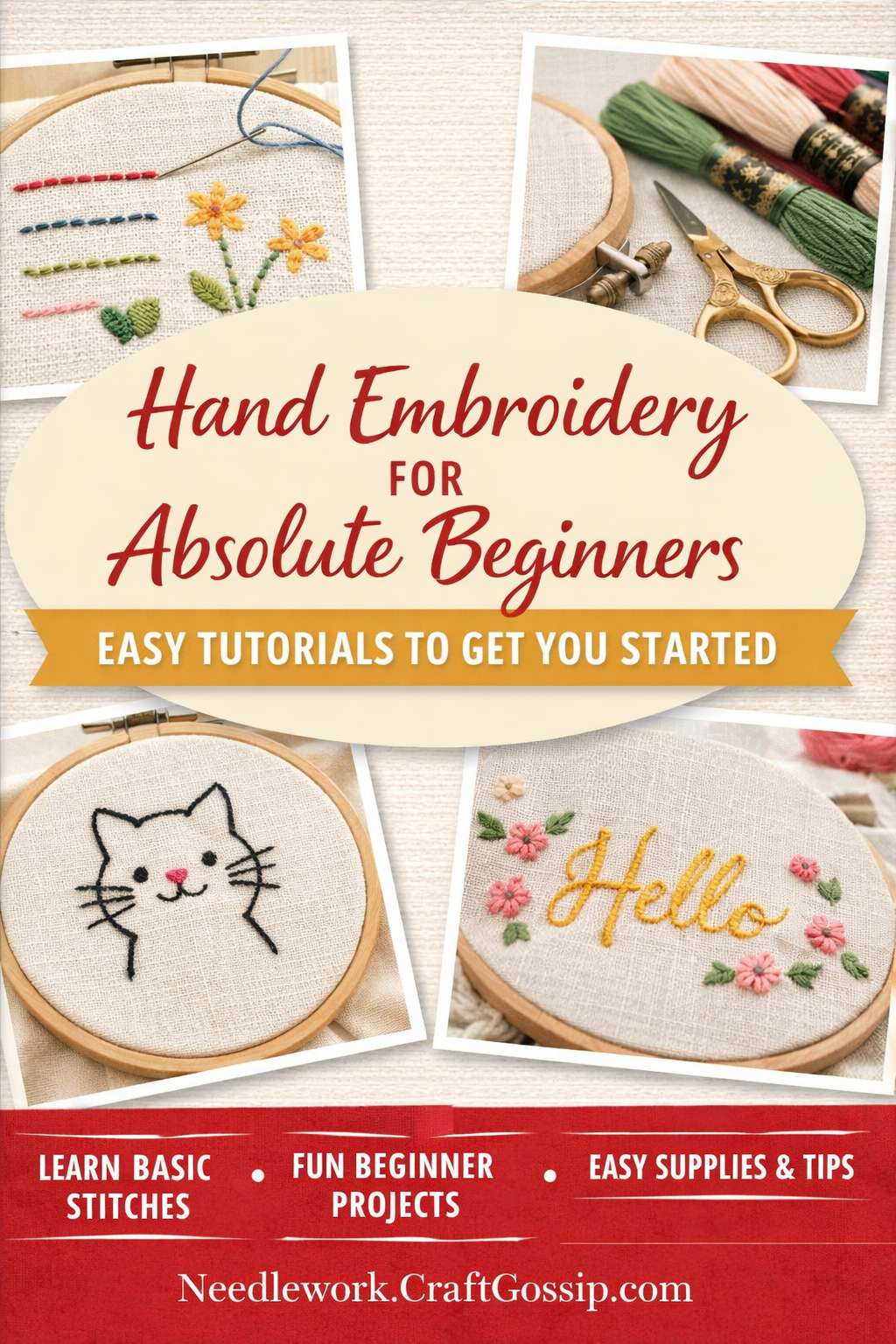
Hand embroidery looks like one of those crafts that should be relaxing from the very first stitch. Then you sit down with a hoop, some thread, a needle that suddenly feels too small to hold, and a vague flower sketch that already looks suspicious. I’ve been there.
The good news is that hand embroidery really is beginner-friendly once you stop trying to start with the fancy stuff. You do not need a giant sampler, a complicated floral wreath, or twenty different stitches rattling around in your head. What you need is a small handful of clear tutorials, a few simple stitches, and projects that let you finish something before the frustration kicks in.
So I pulled together a roundup that feels much more realistic for real-life beginners. These are the tutorials I’d send to anyone who wants to learn hand embroidery without turning it into a full personality overhaul by lunchtime.
Start here before you buy anything extra
Before jumping into patterns, bookmark How to embroider: A complete guide to embroidery for beginners. It walks through the basic supplies, using a hoop, getting started with simple stitches, and even where to begin with your first actual project. I like this one because it treats embroidery as a learnable skill rather than some mystical inherited talent passed down from perfectly organised grandmothers.
Another genuinely helpful first stop is How to Embroider by Hand for Beginners. This is the kind of resource that settles your nerves quickly because it answers the questions beginners actually ask, like which stitch is easiest and which six stitches are worth learning first. Running stitch and backstitch are two of the easiest places to begin, which is exactly why so many simple projects rely on them.
If you want a solid stitch reference you can keep coming back to, save the Step by Step Embroidery Stitch Guide. It gives diagrams for popular stitches and explains their uses, which makes it much easier when you hit that point in a pattern where you think, “I know I’ve heard of this stitch, but absolutely could not identify it in a lineup.”
The best first stitches to learn
One of the easiest ways to make embroidery feel manageable is to focus on a tiny stitch shortlist instead of trying to learn everything at once. 5 Basic Embroidery Stitches Every Beginner Should Learn is a great place to start because it narrows the field and keeps things practical. For most beginners, that kind of focused approach is much more useful than scrolling endless stitch libraries and immediately feeling behind.
You can also pair that with our own Hand Embroidery: 9 Amazing Embroidery Stitches For Beginners. It’s a nice next step once you’ve tried a couple of basics and want to build confidence without diving straight into advanced texture work. Think of it as your “okay, I can actually do this” stage.
For more stitch-based practice, 15 Embroidery Stitch Projects For Beginners is worth a look too. It gives beginners a broader feel for the kinds of stitches and techniques that show up again and again in hand embroidery, which is handy once you’re ready to move from random practice rows into proper little makes.
Easy beginner projects that won’t make you quit
If you’re the kind of person who learns best by making something small and useful, How to do Lazy Daisy Stitch is a lovely first project. Lazy daisy is one of those stitches that looks much fancier than it really is, and that’s exactly the sort of emotional support beginners need. You get immediate floral payoff without needing advanced skills or saint-level patience.
I also really like Hand Embroidery Letters: Simple Stitches and Tips for Beginners. Lettering feels intimidating until someone breaks it down into beginner-friendly line stitches, and this tutorial does that beautifully. It’s a great choice if you want to personalise a hoop, tote, tea towel, or just stitch a word that makes you feel more put together than you currently are.
For a tiny project with very low commitment, Mini cactus embroidery is an excellent first proper pattern. The designs are small, use basic stitches, and feel much less scary than a giant floral hoop that takes up your entire afternoon and most of your optimism.
A sweet option for animal lovers is Easy Cat Hand Embroidery Pattern. Small motifs like this are perfect for beginners because they let you practise outlines, filling, and neat finishing without committing to an enormous design. Also, tiny stitched cats are hard to be mad at, even when your satin stitch goes a bit rogue.
If you want something cheerful to practice with, beginner-friendly patterns from DMC are always handy to keep in your back pocket. Their patterns tend to be clear, attractive, and approachable, which is exactly what beginners need when they are still figuring out how not to knot their thread into a tiny emotional crisis.
Why beginner embroidery goes wrong so quickly
Honestly, most people do not quit embroidery because they lack talent. They quit because they start with the wrong project. A design can be beautiful and still be a terrible first choice if it demands ten stitch types, perfect tension, and the patience of someone who has definitely never had children yelling from the other room.
The better approach is to start with projects that use simple outlines, small motifs, repeated stitches, and forgiving shapes. Flowers, letters, leaves, stars, little animals, and geometric motifs are all great beginner territory. They help you build confidence fast, and that matters more than stitching something impressive right out of the gate.
It also helps to accept that your first few pieces are allowed to look handmade. In fact, they should. Slightly uneven stitches are part of the charm. This is not machine-perfect work. It is thread, fabric, and a person learning something new while probably also reheating their tea for the third time.
What you really need to get started
The nice thing about hand embroidery is that the supply list is refreshingly short. A hoop, embroidery needle, fabric, scissors, and stranded cotton will get you going without a dramatic trip to the craft store. You do not need every thread colour under the sun before you make your first stitch.
A simple cotton or linen fabric is usually easiest for beginners because it is stable and easier to see. Smooth fabric helps a lot when you are learning how stitches sit on the surface. Pair that with a few basic thread shades and one or two practice patterns, and you are already far more prepared than you think.
A beginner-friendly way to work through this roundup
If you are brand new, I’d go in this order:
Start with one complete beginner guide so you understand the supplies and setup.
Then learn just three or four stitches, not twelve.
After that, choose one tiny project like a letter, a flower, or a cactus motif.
Once you finish that, move on to another small design that repeats the same stitches with maybe one new stitch added in.
That’s the part people skip. They try to leap from “What does embroidery floss do?” straight to heirloom masterpiece. No wonder the hoop ends up shoved in a drawer.
One last thing before you thread that needle
If you’ve been wanting to try hand embroidery but kept putting it off because it looked fiddly or overly precious, this is your sign to start small and keep it simple. Learn a few stitches. Stitch one tiny thing. Let it be a bit wonky.
Leave a Reply