Whether you are a first-time stitcher or have spent decades with a needle in hand, one truth never changes: good quality fabric makes all the difference. Over many years of embroidery, I’ve learned that nothing affects the stitching experience more than the fabric you choose. High-quality fabric doesn’t just make embroidery easier—it makes it more enjoyable, more precise, and far more satisfying.
While premium embroidery fabrics can cost a little more upfront, they are absolutely worth the investment. Quality fabric holds its shape, supports even tension, resists wear, and ages beautifully. When you stitch on good fabric, you’re not just making something decorative—you’re creating a piece that can become a family heirloom, enjoyed for decades and passed down through generations. Few things compare to knowing your embroidery will still be admired 50 or 60 years from now, quietly aging with grace.
Choosing the Right Fabric for Your Embroidery Style
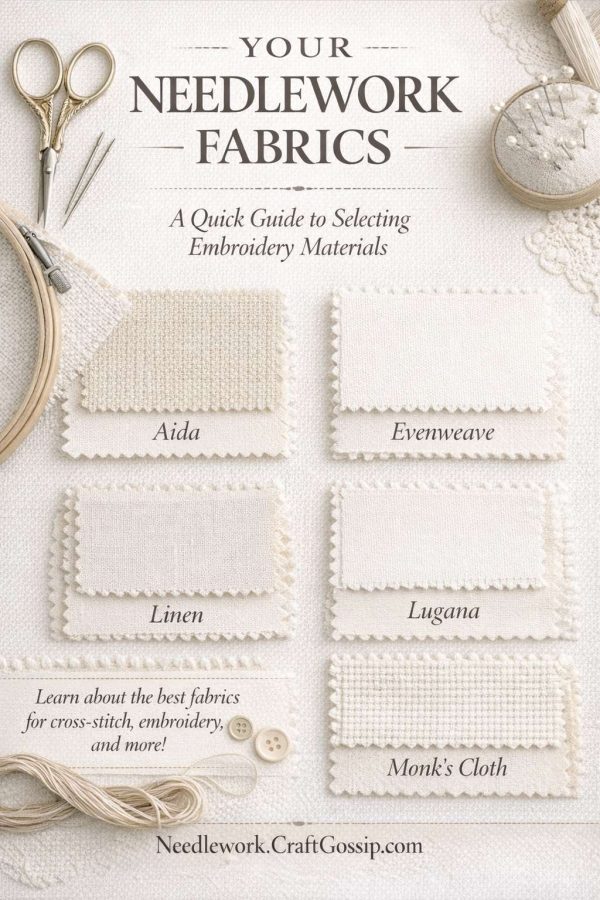
The type of embroidery you are working on will guide your fabric choice. There is a wonderful variety available, including linen in many thread counts and colours, Evenweave, Hardanger fabric, and Aida, each suited to different techniques.
For cross stitch, many stitchers start with 14-count or 16-count Aida, which is easy to see and count. As confidence grows, you might choose to work on linen or Evenweave, often stitching over two threads. For example, 28-count or 32-count Evenweave or linen stitched over two produces the same finished size as 14- or 16-count Aida, but with a softer, more refined look.
Understanding Evenweave and Linen Fabrics
Evenweave fabric is defined by its consistency. The warp and weft threads are evenly spaced, meaning the fabric has the same number of threads per inch both vertically and horizontally, and each thread is the same thickness. This regular structure makes Evenweave ideal for counted embroidery styles such as Hardanger, blackwork, and geometric embroidery, where precision is essential.
Not all fabrics are Evenweave. Some have uneven thread counts or variable thread thickness, which makes them unsuitable for geometric or counted thread work. However, these uneven fabrics can still be wonderful for creative or freeform embroidery, surface stitching, and artistic projects where exact symmetry is not required.
Dyed, Sparkly, and Specialty Fabrics
For stitchers looking to add something special to a project, hand-dyed and specialty fabrics offer endless inspiration. Dyed linens can add depth and mood to embroidery, enhancing both modern and traditional designs. Subtle variations in colour give stitched pieces warmth and character that plain fabrics sometimes lack.
Opalescent or metallic-thread fabrics—often referred to as sparkle fabrics—are especially beautiful for Christmas embroidery, wedding pieces, and special occasion gifts. These fabrics have fine metallic threads woven throughout, catching the light softly rather than overpowering the design. Imagine candlelight reflecting off a sparkly table runner or festive embroidery—subtle, elegant, and magical.
Where to Find Quality Needlework Fabrics
Specialist needlework retailers carry a wide range of high-quality embroidery fabrics, including trusted European linens and Evenweaves. Look for suppliers that stock reliable brands and offer detailed information about thread count, fibre content, and recommended uses. Having access to a broad selection makes it much easier to match the perfect fabric to your project.
Choosing the right embroidery fabric is not just a technical decision—it’s part of the creative process. The fabric sets the foundation for your work, influences how your stitches behave, and determines how well your finished piece stands the test of time. Invest wisely, experiment when you can, and enjoy the simple pleasure of stitching on fabric that truly supports your craft.
Good fabric doesn’t just hold stitches—it holds memories.
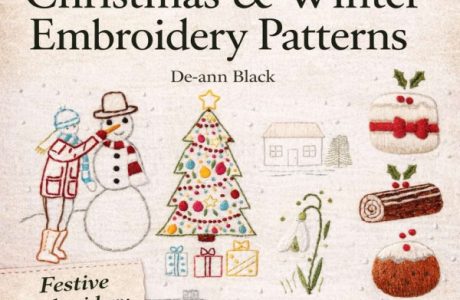
Looking for more Christmas Embroidery Patterns? Check these out on Etsy
Leave a Reply